Use plant protection products with caution. Always read the label and product information before use.
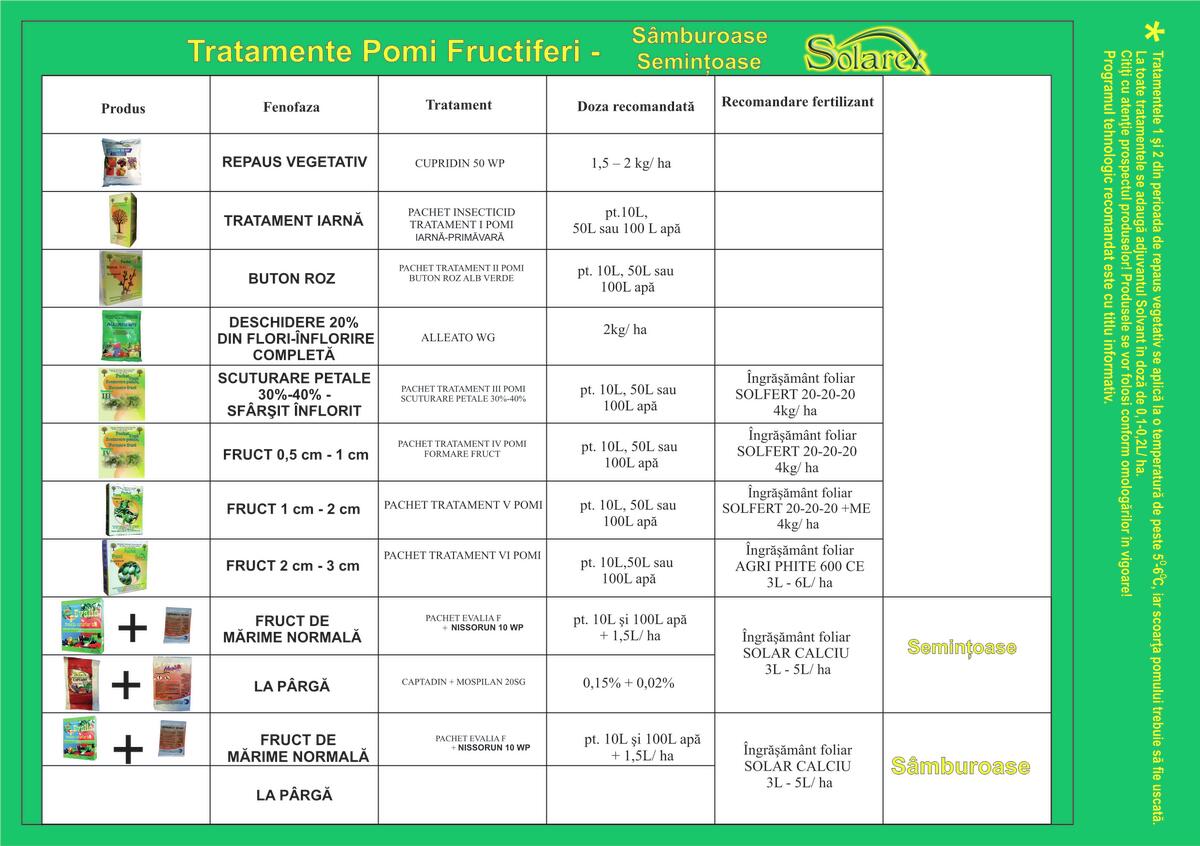
TREATMENT SCHEDULE – FRUIT TREES – POME FRUITS
The most dangerous diseases are:
- SCAB (Venturia inaequalis) – affects the above-ground parts of the tree, but the most severe effects are on the leaves and fruit. The infection on the leaves begins on the underside in the form of grayish spots—olivaceous spots—that grow in size, after which the affected tissue turns brown. Grayish-olive spots appear on the fruit, leading to cracks that facilitate the onset of other diseases and pest infestations. Affected fruit becomes misshapen, cracked, and flavorless.
- POWDERY MILDEW (Podosphaera leucotricha) — is a disease that attacks buds, leaves, inflorescences, shoots, and fruit. It appears as the apple tree begins its growing season—at budbreak—in the form of a white, powdery paste. The leaves fail to unfurl and take on a curled appearance. Affected fruits dry out and fall off.
Preventive treatments play an important role in keeping these two diseases under control and are applied according to a schedule, based on growth stages.
The most dangerous pests are: Worms spp., Caterpillars, Aphids, Mites, the Apple Worm, and the Woolly Aphid.
They colonize branches and leaves, penetrate flowers, and then enter the fruit, where they destroy the seeds and pulp, ultimately leading to a significant reduction in yield and endangering the health of the trees.
To combat both diseases and pests, we recommend using the treatment packages outlined in the schedule, according to the growth stages. For bountiful harvests, we also recommend using fertilizers, applied according to the growth stages.
These are commercial treatment packages. The products can be applied together or separately. The package is used on fruit trees when they are in the corresponding growth stage.