Use plant protection products with caution. Always read the label and product information before use.
TREATMENT SCHEDULE GRAPEVINES
The most dangerous diseases affecting grapevines are:
- mildew (Plasmopara viticola) – is caused by a fungus that attacks all parts of the grapevine: leaves, young shoots, clusters, inflorescences, flowers, grapes, and tendrils. Signs of infection are visible on the upper surface of the leaves, where yellowish spots appear, and on the underside, a whitish fuzz develops in these areas. An infestation of the grape clusters prevents the grapes from accumulating sufficient sugars, resulting in inferior-quality wine. Infested clusters remain small, and the berries shrivel and fall off easily.
- POWDERY MILDEW (Uncinula necator) – is caused by a fungus that attacks all parts of the plant, where a grayish-white powdery coating appears. Flowers abort, young grapes turn brown and fall off, the berries split open revealing the seeds, and wines made from grapes affected by the disease are of poor quality.
- GRAY MOLD (Botrytis cinerea) – yellowish spots appear on the leaves, which turn reddish and develop a powdery mold; brown or gray spots appear on the shoots; small spots with soft tissue appear on the berries and grow rapidly; the berries soften, crack, shrivel, and become covered with an abundant, brownish-gray, powdery mold.
The most dangerous pests of grapevines are:
- THE GALL MITES – a spider mite that is particularly dangerous to grapevines. Signs of infestation appear in the spring after budbreak, when the mite colonizes the underside of the leaves, bites, and feeds on the cell sap, multiplying rapidly. The infestation spreads to shoots and flower clusters, leading to flower abortion and, consequently, reduced yields.
- VINE MOTH – has 2–3 generations per year and overwinters under the bark of vines and canes. Signs of infestation include the presence of larvae and silken webs on the clusters, under the bark of the trunks, or on older canes that are peeling. In June, the larvae emerge and feed on flower buds and young berries. The most severe infestation occurs in July and August, when they bore into the berries and consume the pulp, thereby facilitating the onset of rot.
- GRAPE WASP – adults feed on the juice of sweet, ripe, and overripe grapes, causing damage of up to 90% of the crop. They attack all grape varieties, starting with early and mid-season varieties and ending with late varieties that are harvested when overripe. In addition to direct damage, once the fruit is punctured, it is easily infected with rot.
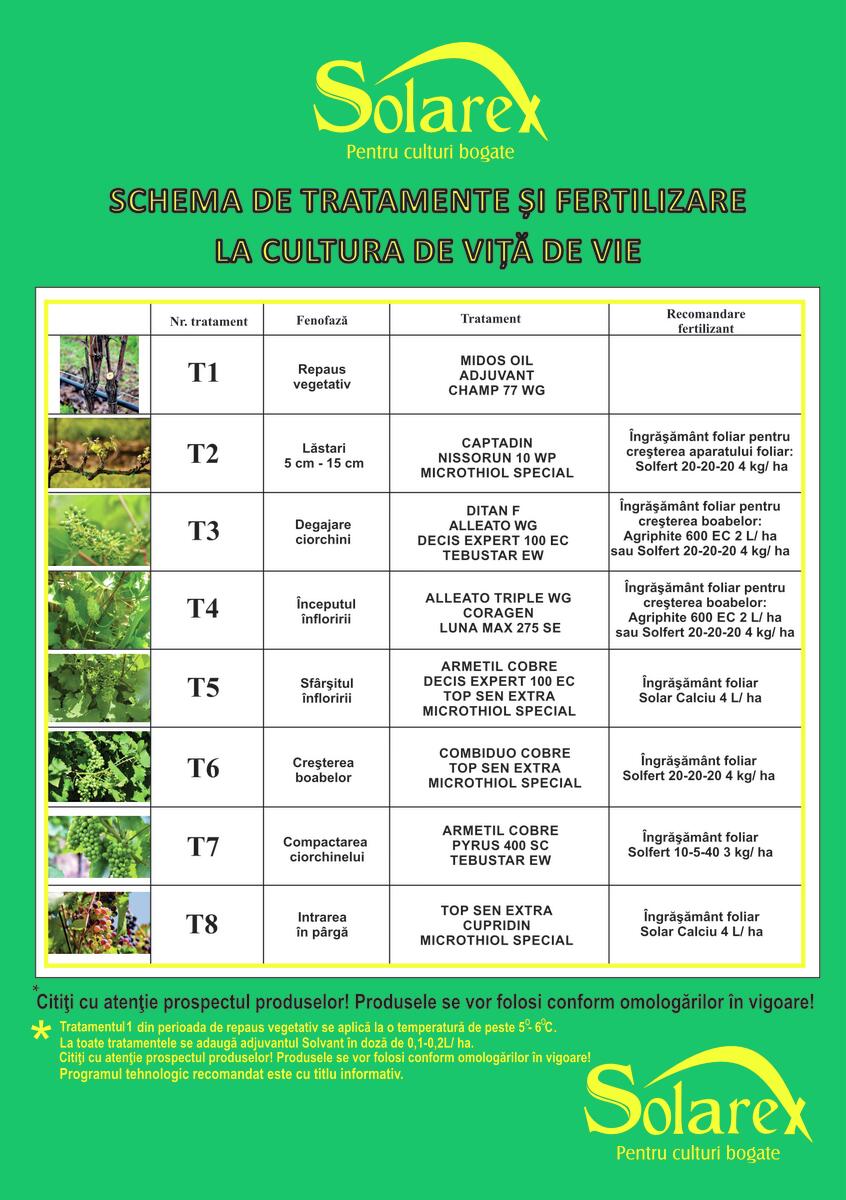
To combat both diseases and pests, we recommend following the treatment schedule. The packages are easy to use and provide complete protection.
For bountiful harvests, also use the fertilizers recommended in the schedule, according to the growth stages.
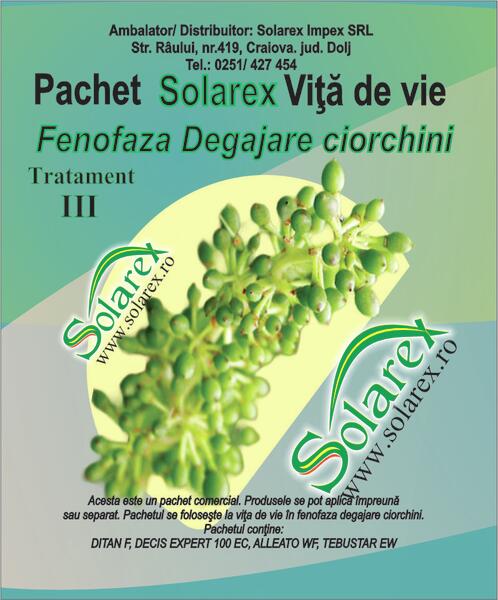
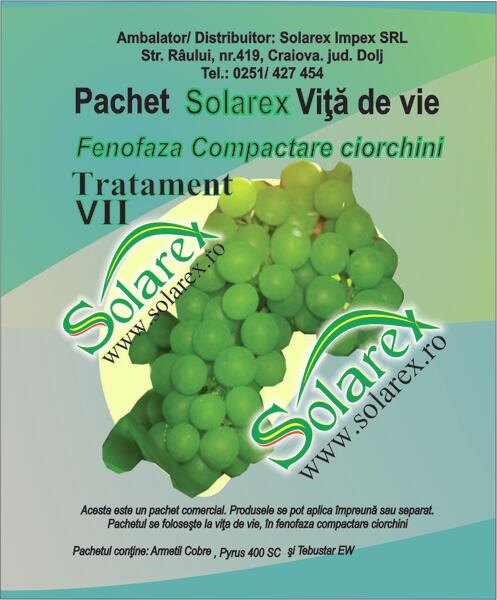
These are commercial packages. The products can be applied together or separately. The package is used on grapevines when they are in the corresponding growth stage.