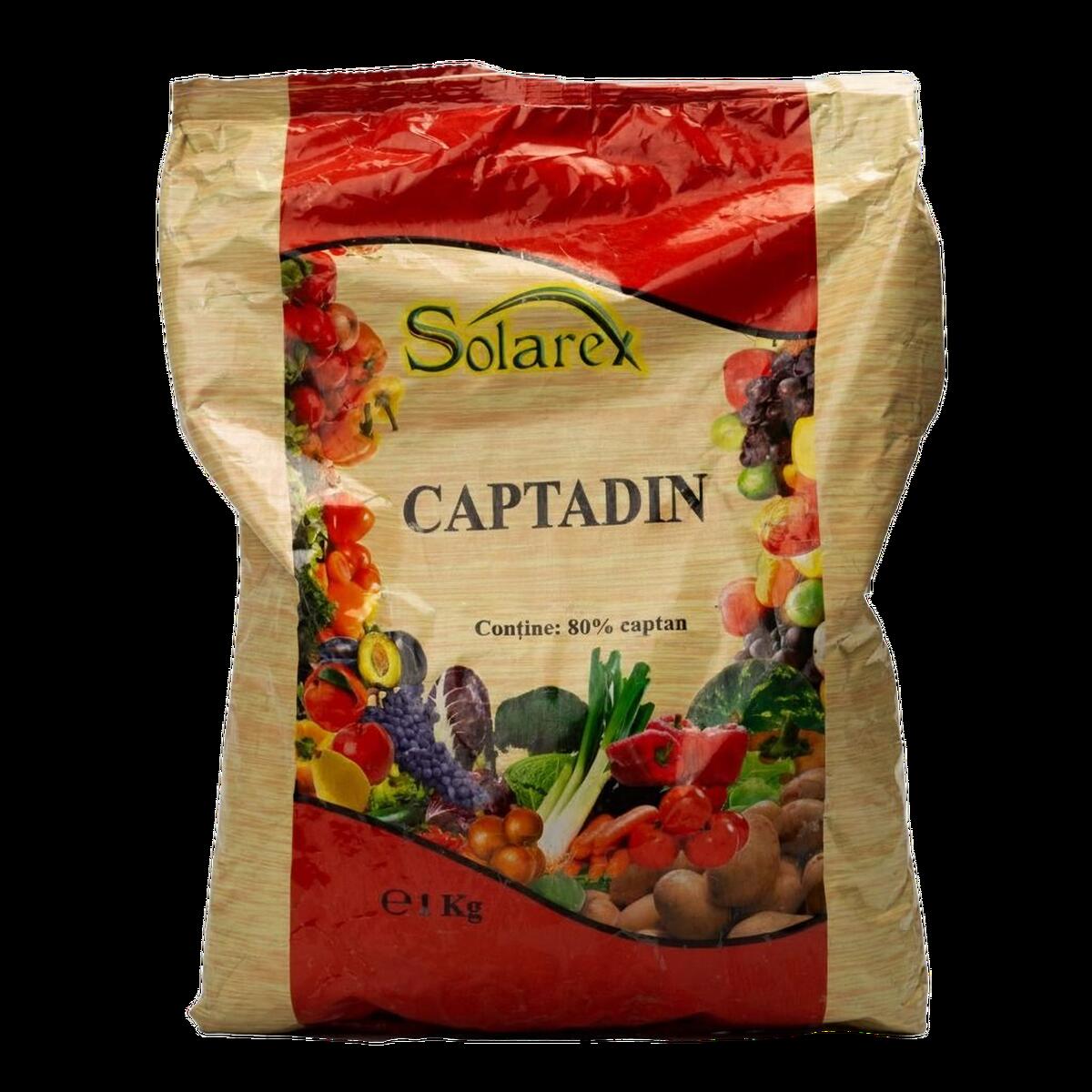
800 g/ kg captan • Producer: ARYSTA LIFESCIENCE SAS
Packaging
Combats
Onion manna Cucurbitaceae manna Solanaceous manna Vine manna Moniliosis, Brown rot Brownish leaf spot Plum leaf red spot Apple Tree Raptor Diseases - Bacteria| Crop | Dose | Conditions | Details |
|---|---|---|---|
| Cucumbers | 0.15% | Cucurbitaceae manna | 1.5 kg/ha |
| Onions | 0.15% | Onion manna | 1.5 kg/ha |
| Apple | 0.15% | Apple Tree Raptor | 2,250 kg/ha |
| Plum | 0.15% | Monilia, Brown rot, Plum leaf red spot | 1.5 kg/ha |
| Tomato | 0.15% | Solanaceous manna, Brownish leaf spot | 1.5 kg/ha |
| Vines | 1.25kg / ha | Vine manna | in 1000 L solution |
Mode of Action: Captadin is a contact fungicide with preventive and curative action against a broad spectrum of plant-pathogenic fungi, to be applied during the growing season. It works by blocking the respiratory and cell division processes of pathogens. Depending on weather conditions, it remains effective on the plant for 7–20 days. It promotes the healing of wounds caused by certain external agents.
Directions for Use: Apply during the growing season by spraying as soon as warning signs appear. For optimal results in controlling pathogens, treatments should be applied preventively when conditions favorable to disease development arise or upon the appearance of the first symptoms. The interval between treatments is 7–14 days, depending on the crop, weather conditions, and disease progression. Use standard water volumes appropriate for the crop type and growth stage. The spray solution can be prepared directly in the sprayer tank. Calculate the amount of Captadin required for the entire volume of liquid, dissolve it in a few liters of water, pour it into the tank—which has been half-filled in advance—while stirring constantly, and top it off with water to the mark. During treatment, use properly adjusted sprayers that ensure constant agitation and pressure, as well as properly calibrated nozzles to achieve a fine spray and good coverage of both sides of the leaves. For apple trees, apply a maximum of 10 treatments with Captadin per season. For plum trees, apply a maximum of 4 treatments with Captadin per season. For tomatoes, apply a maximum of 2 treatments with Captadin per season.
Compatibility: The product is compatible with most fungicides and insecticides commonly used in Romania, with the exception of calcium and barium polysulfides, Bordeaux mixture, and other strongly alkaline substances. Do not mix with oily products. Before use, consult the compatibility tables and conduct a test.
Pre-harvest interval: After the last application and until harvest, a minimum of 14 days must elapse for onions and cucumbers, 21 days for tomatoes, grapevines, and plums, and 28 days for apples.
----------------------------------------------------------------------------------------------------------------------------------------------------------------------------------------------------------
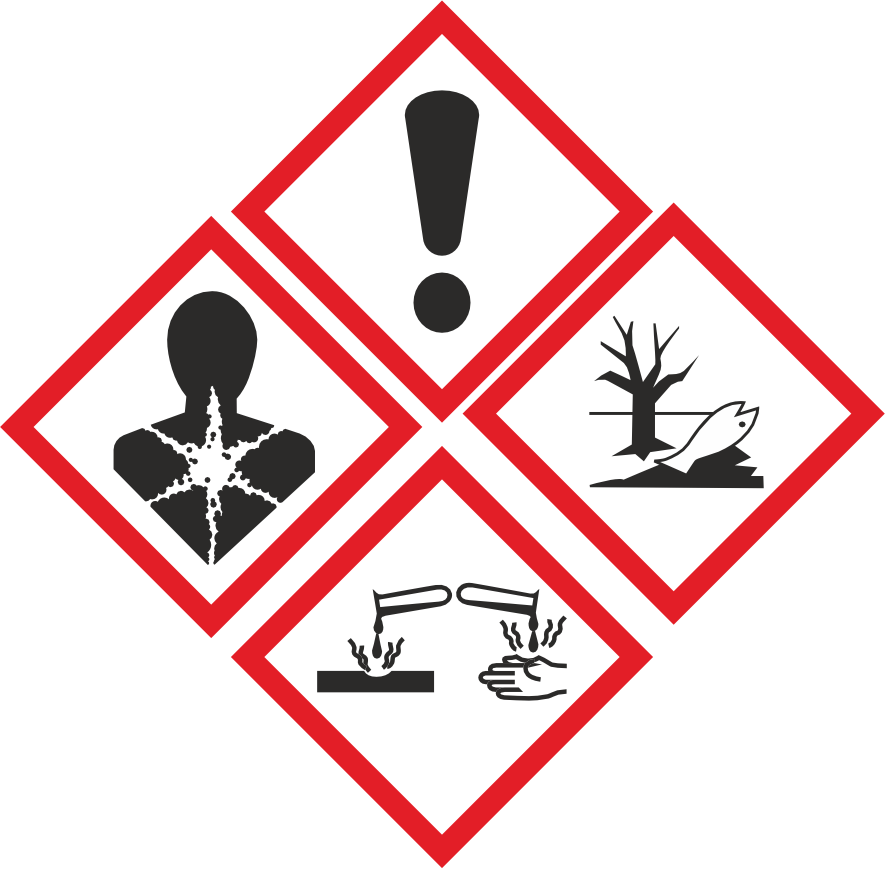
Hazard statements: H317 - May cause an allergic skin reaction. H318 - Causes serious eye damage. H351 - May cause cancer. H410 - Very toxic to the aquatic environment with long-term effects. Precautionary statements: P202 - Do not handle until all safety precautions have been read and understood. P273 - Avoid release into the environment. P280 - Wear eye protection, face protection, protective clothing, and protective gloves. P305+P351+P338 - IF IN EYES: Rinse cautiously with water for several minutes. Remove contact lenses, if present and easy to do. Continue rinsing. P308+P311 - IF exposed or likely to be exposed: call a POISON CONTROL CENTER or a doctor. P391 - Collect spilled product. P405 - Keep under lock and key. P501 - Dispose of contents/container at hazardous or special waste collection points in accordance with local, regional, national, and/or international regulations. P302+P352 - IF ON SKIN: Wash with plenty of soap and water. EUH401 - To avoid risks to human health and the environment, follow the instructions for use. SPe3 - To protect aquatic organisms, maintain an untreated buffer zone of 15 m from surface waters. SP1 - Do not contaminate water with the product or its packaging.
See other products